OAKVILLE GALLERIES
Gairloch Gardens & Centennial Square
28.2.2026 - 23.5.2026
GROUP EXHIBITION
Abbas Akhavan, Lili Huston-Herterich, Sukaina Kubba, Jeremy Laing, Jenine Marsh, Diyar Mayil, Marisa Portolese, Swapnaa Tamhane & Aimée Zito Lema
curated by Karen Kraven
Les Fleurs du Mal brings together artworks that explore flowers, gardens, mourning, and remembrance. Grappling with the complexities of the thresholds between life and death, these works consider commemoration, materiality, and embodiment to imagine futures and elsewheres, while also reflecting on the disenchantment within those fantasies and the fleeting beauty of everyday life.1
Prior to floral arrangement, the cut flower is poised in anticipation of being assigned meaning. Bouquets are often substituted for words or sentiments; their poetics insist on both the affirmation and fragility of life. The flower becomes a stand-in—like welcome company offered by those who could not be there, or sent in lieu of genuine support.
The garden is poetic and contradictory: a place of impermanence and decay, a rebel outpost and a communal paradise. On the one hand, it offers sanctuary; on the other, it performs “the act of possessing.”2 This tension “makes visible one of the most interesting aspects of gardens: that they exist on the threshold between artifice and nature, conscious decision and wild happenstance.” 3 The garden is an experiential space that spills beyond its boundaries, as it is as much about the gardener and the surrounding world as it is about the plants and ecosystems within. Mapping otherwise, the metaphors of the flower garden become a stage for narratives of transformation.
The exhibition borrows its title from Baudelaire’s infamous book, which explores themes of death, a fascination with evil, and the search for a utopian ideal. Often translated into English as The Flowers of Evil, the French title can also be read as Wrong Flowers, Flowers of Illness, or Flowers of Pain. Mal is an ambiguous word in French. It asks: what can be made from human pain, cruelty, longing, and greed?
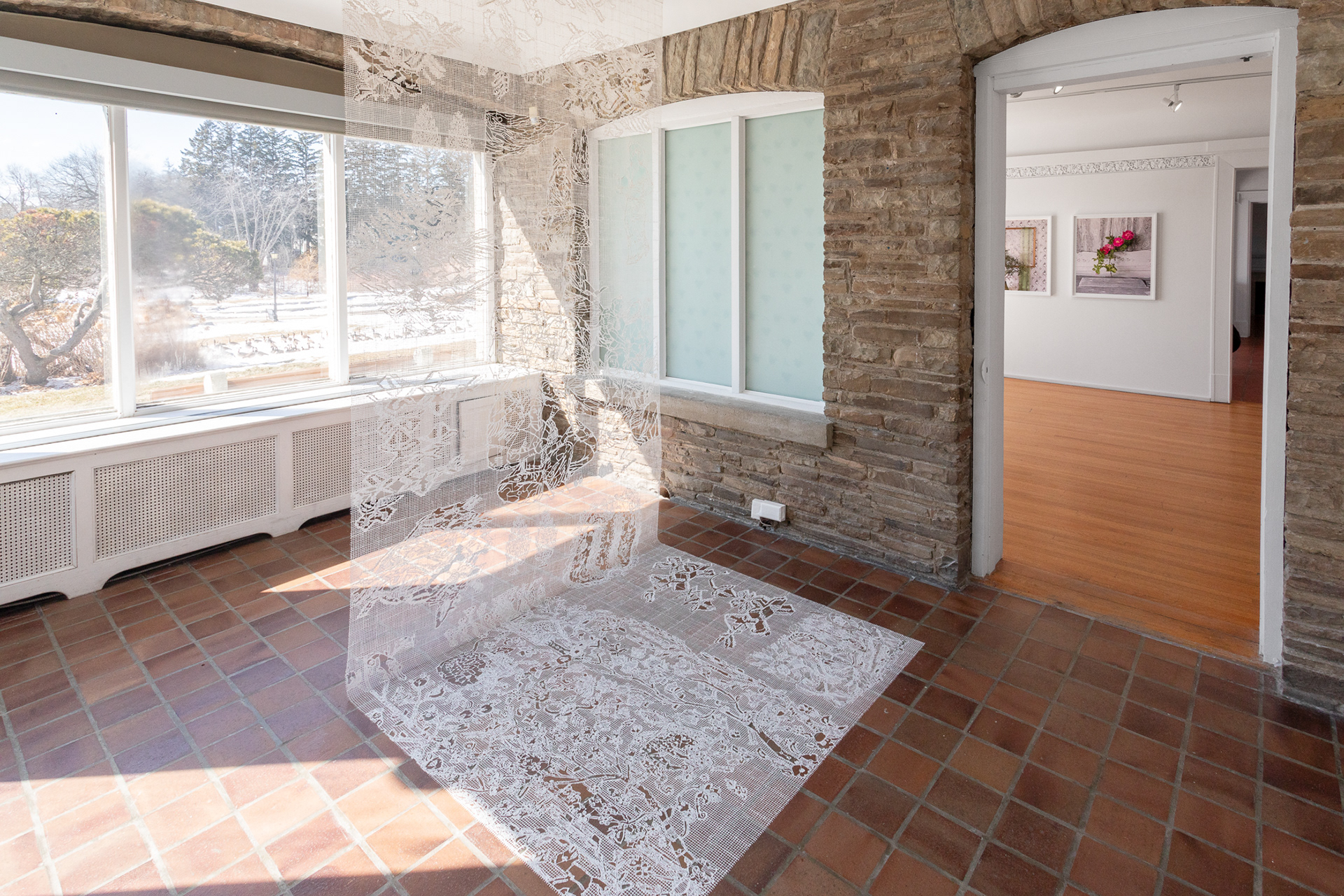
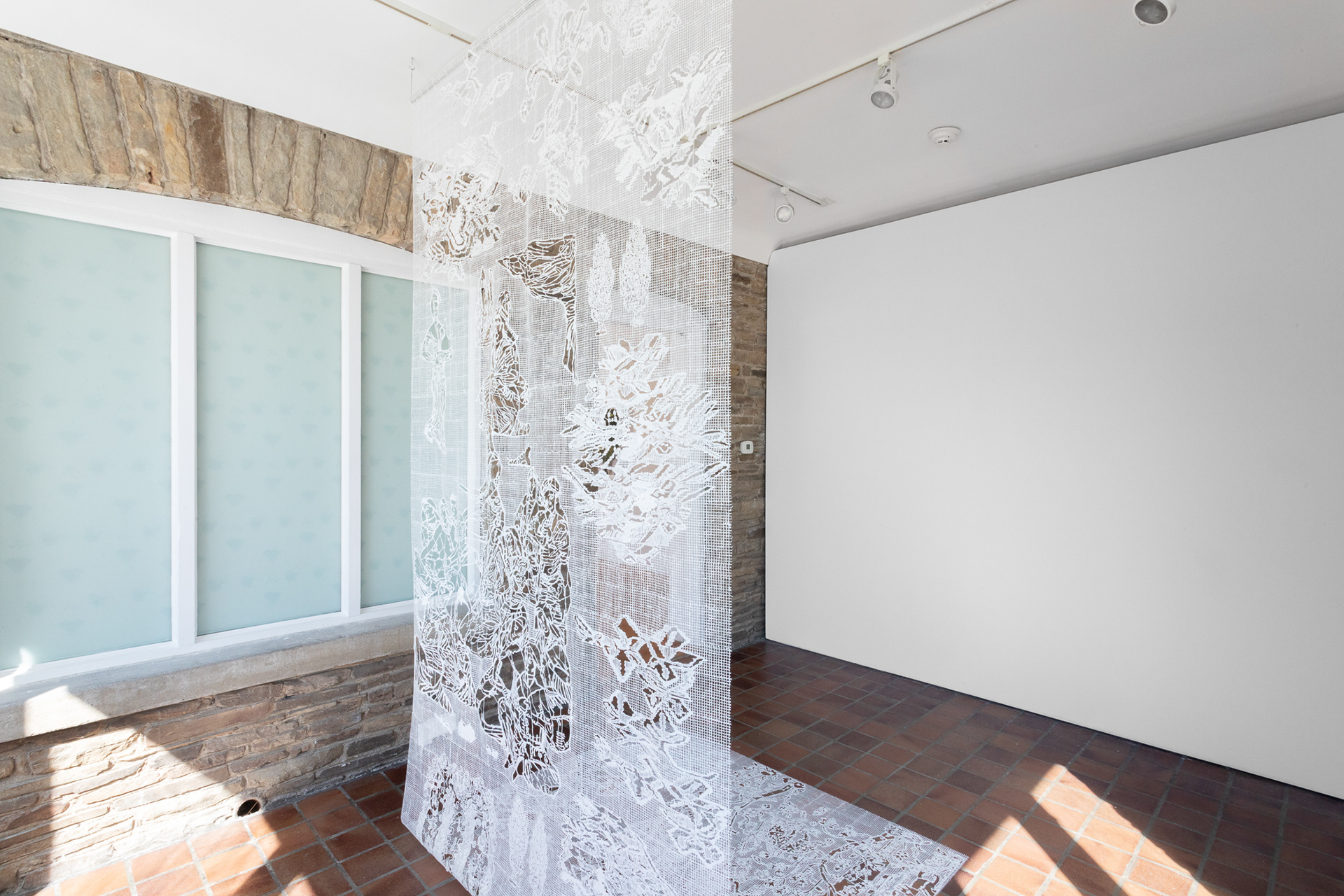
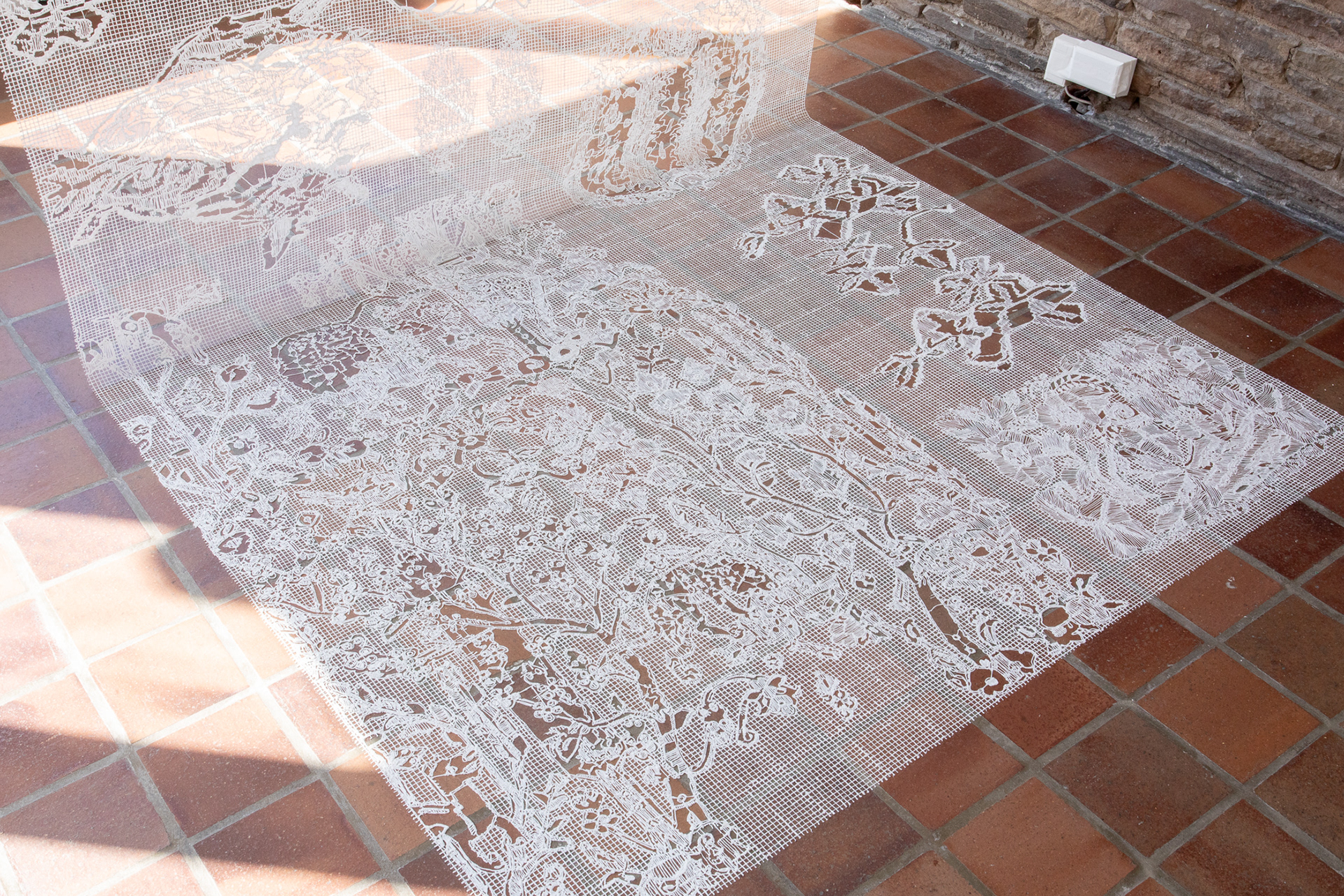
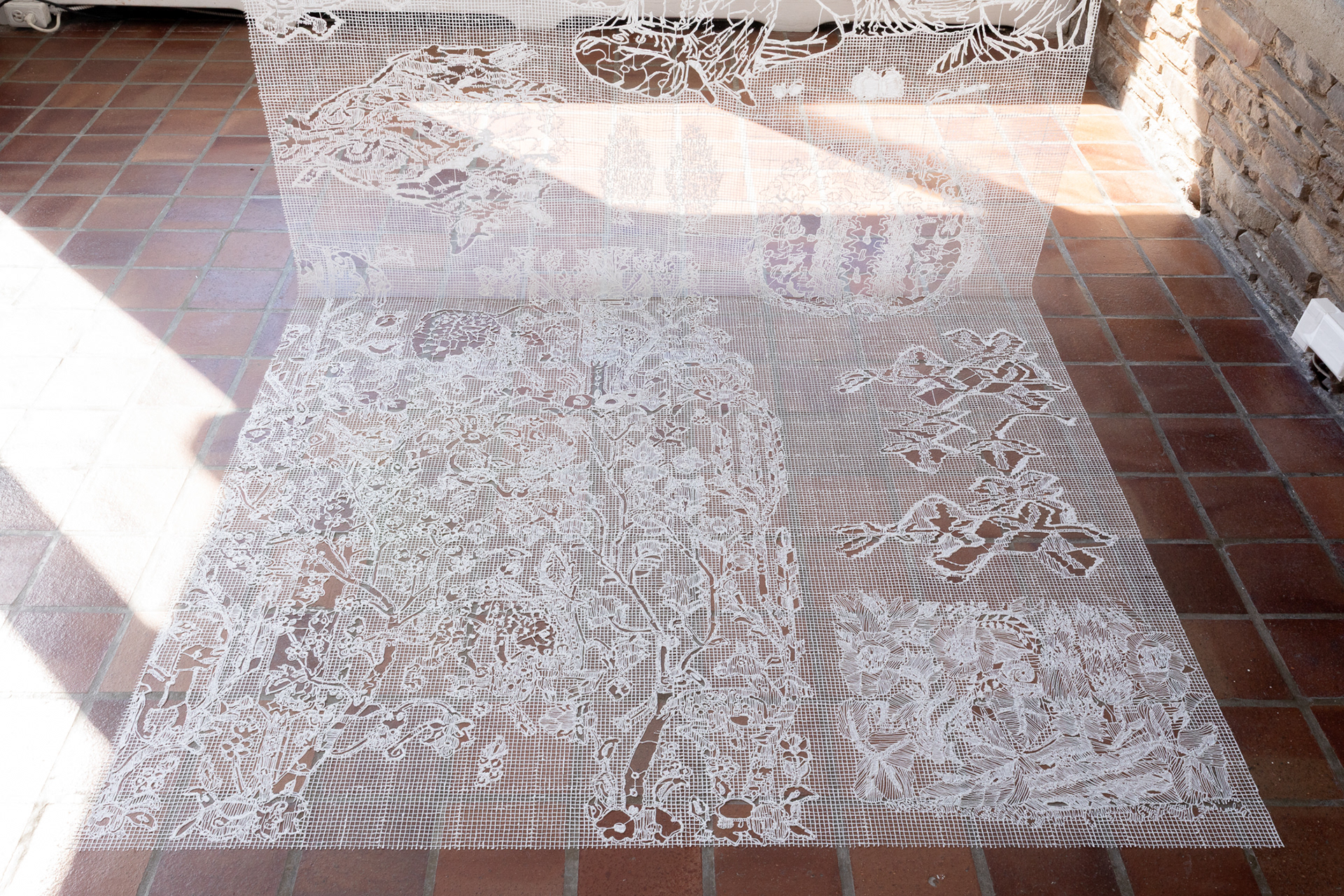
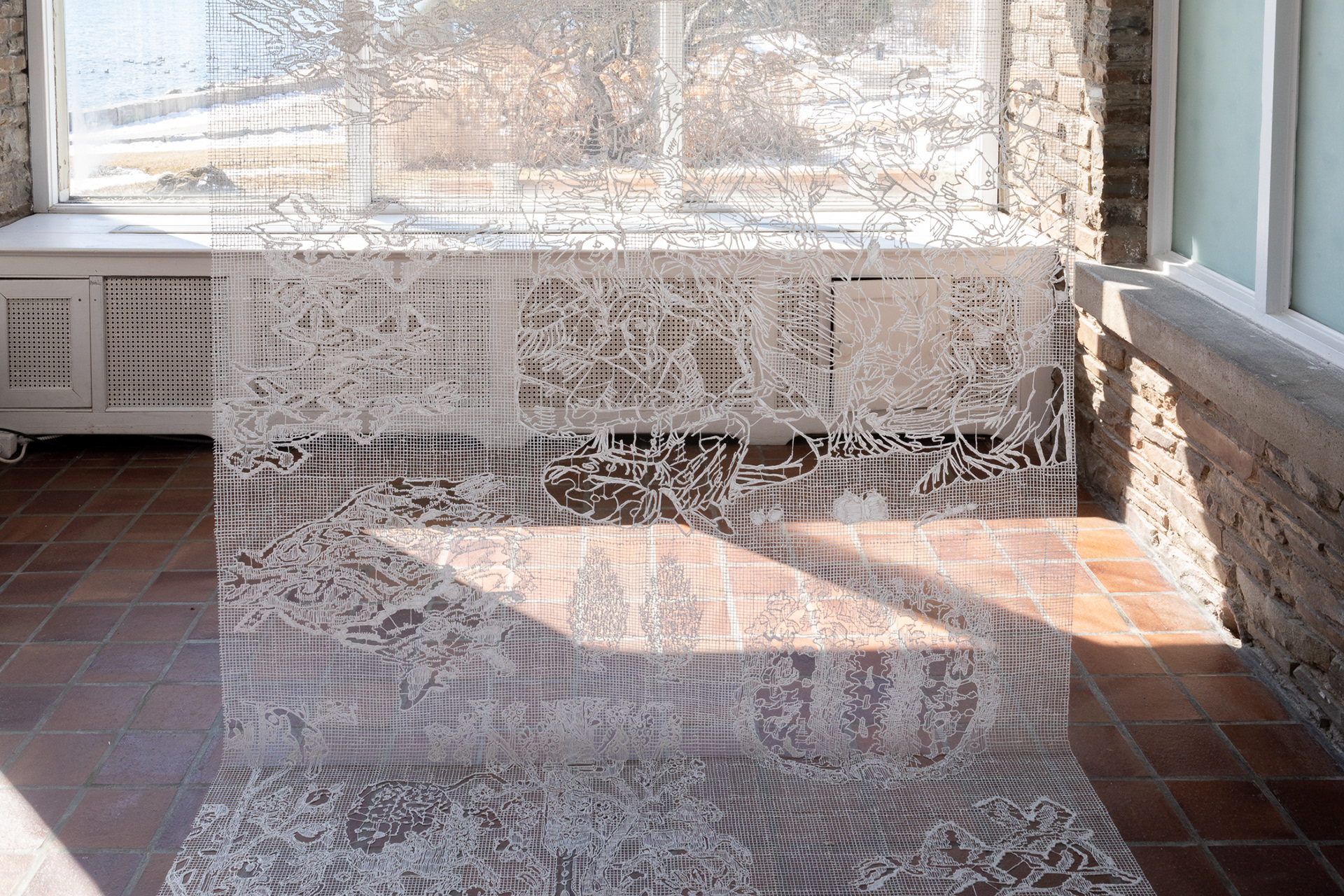
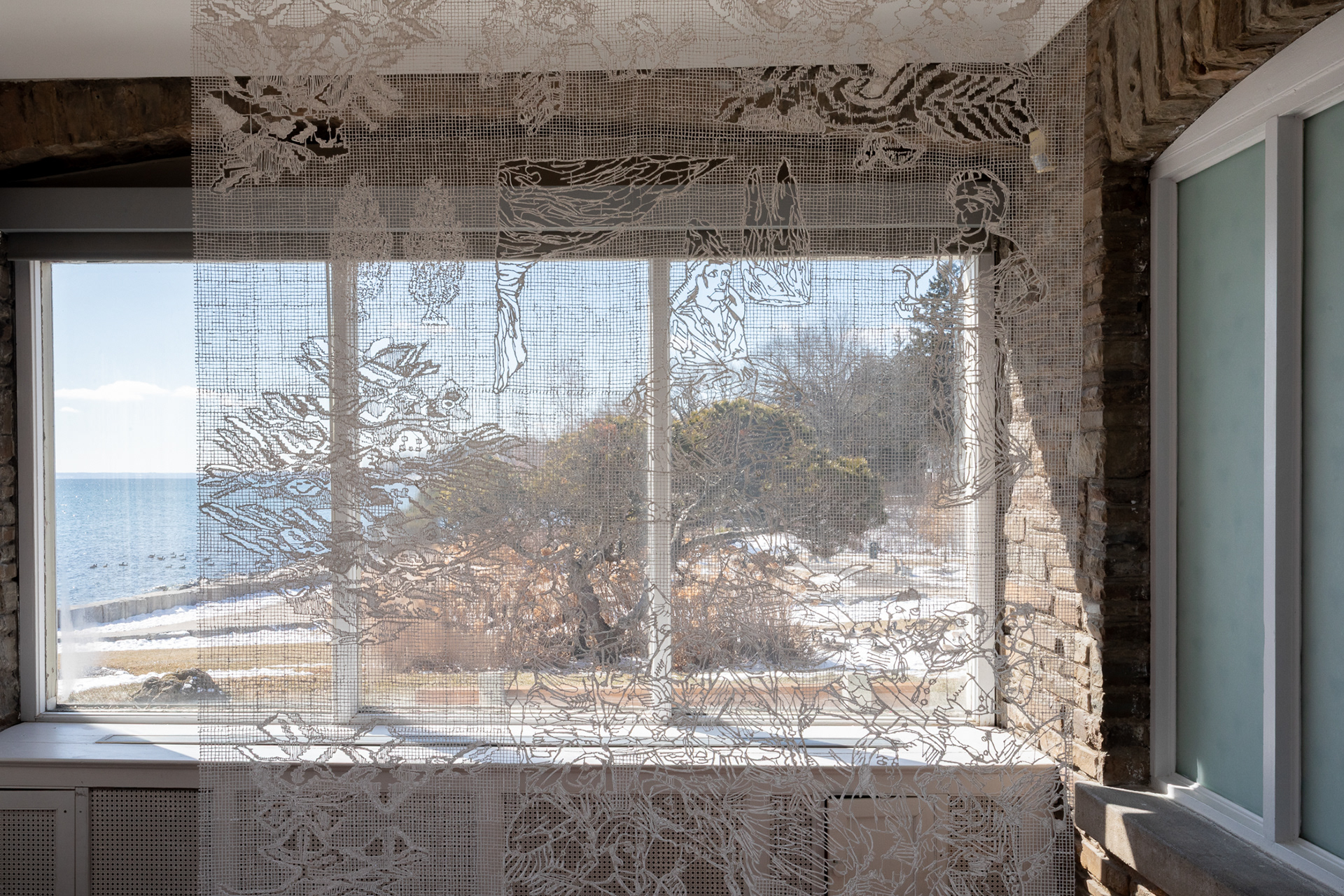
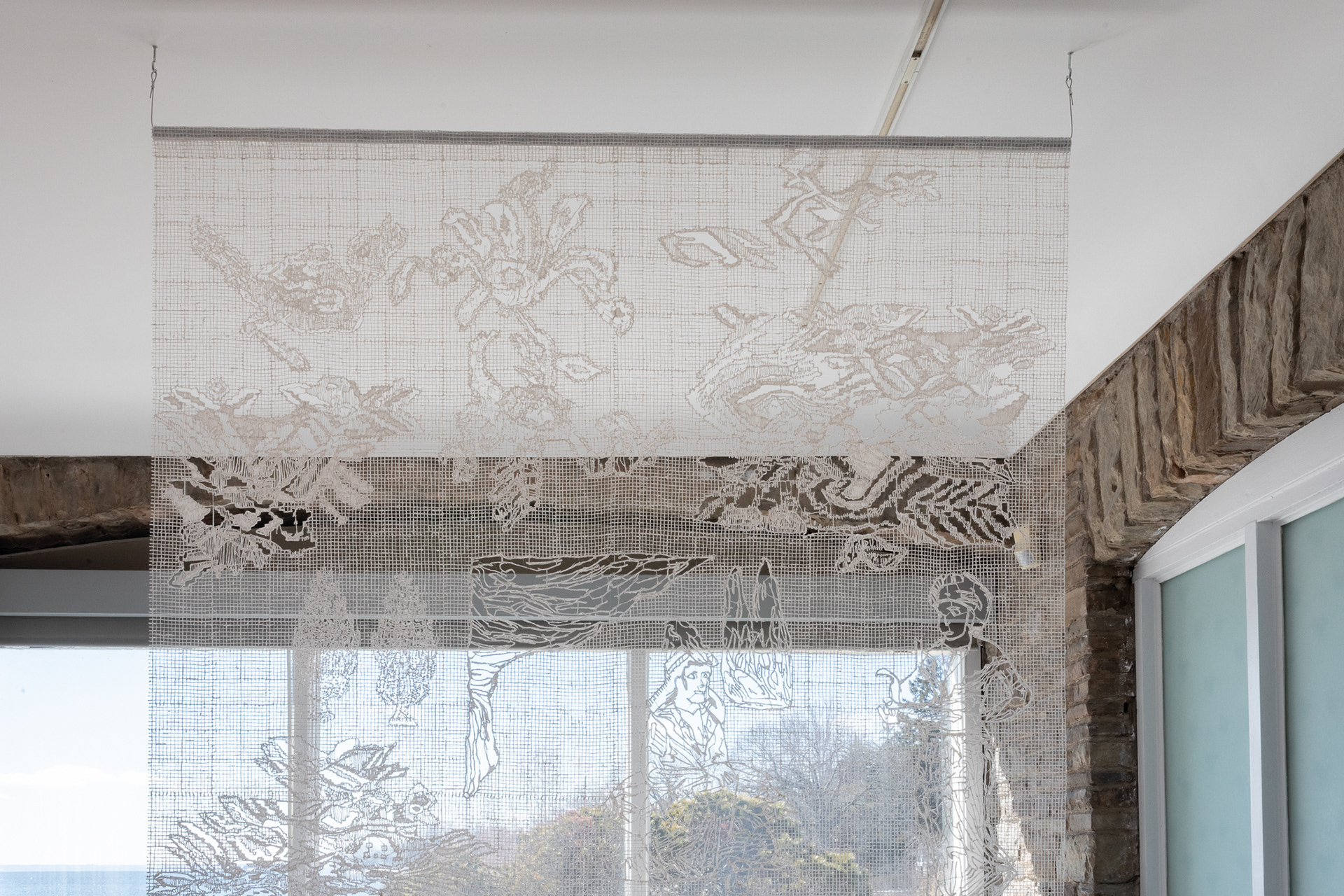
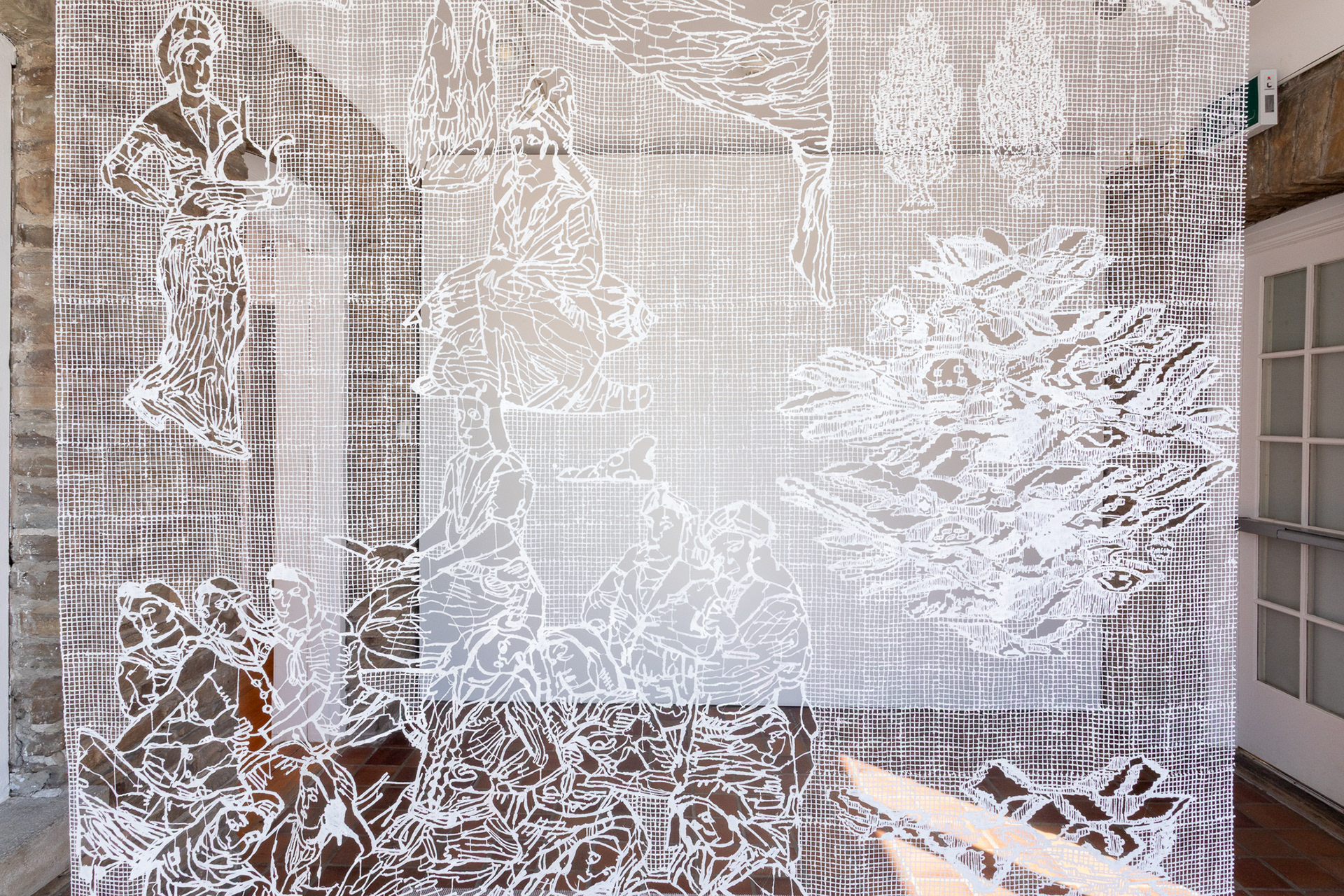
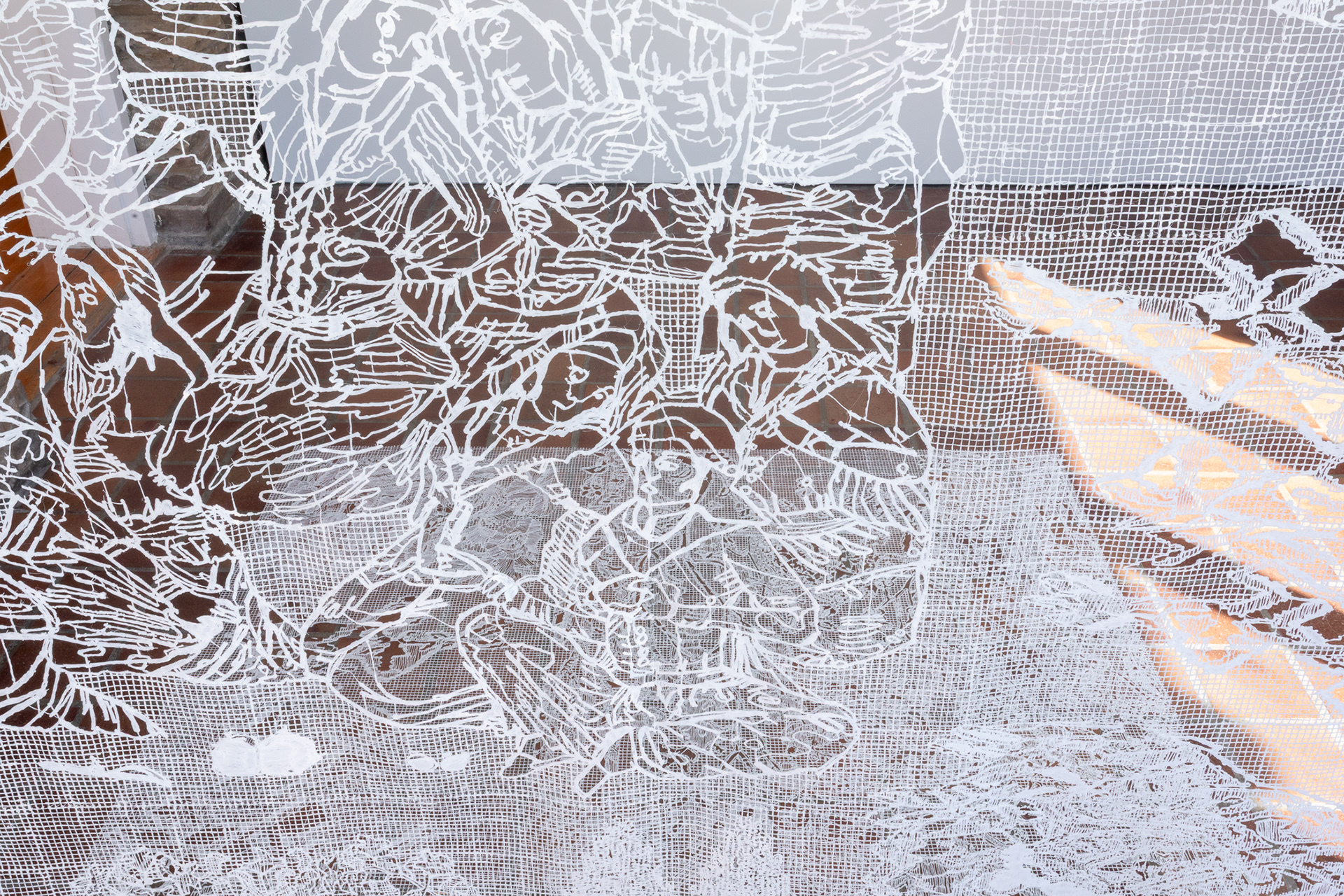
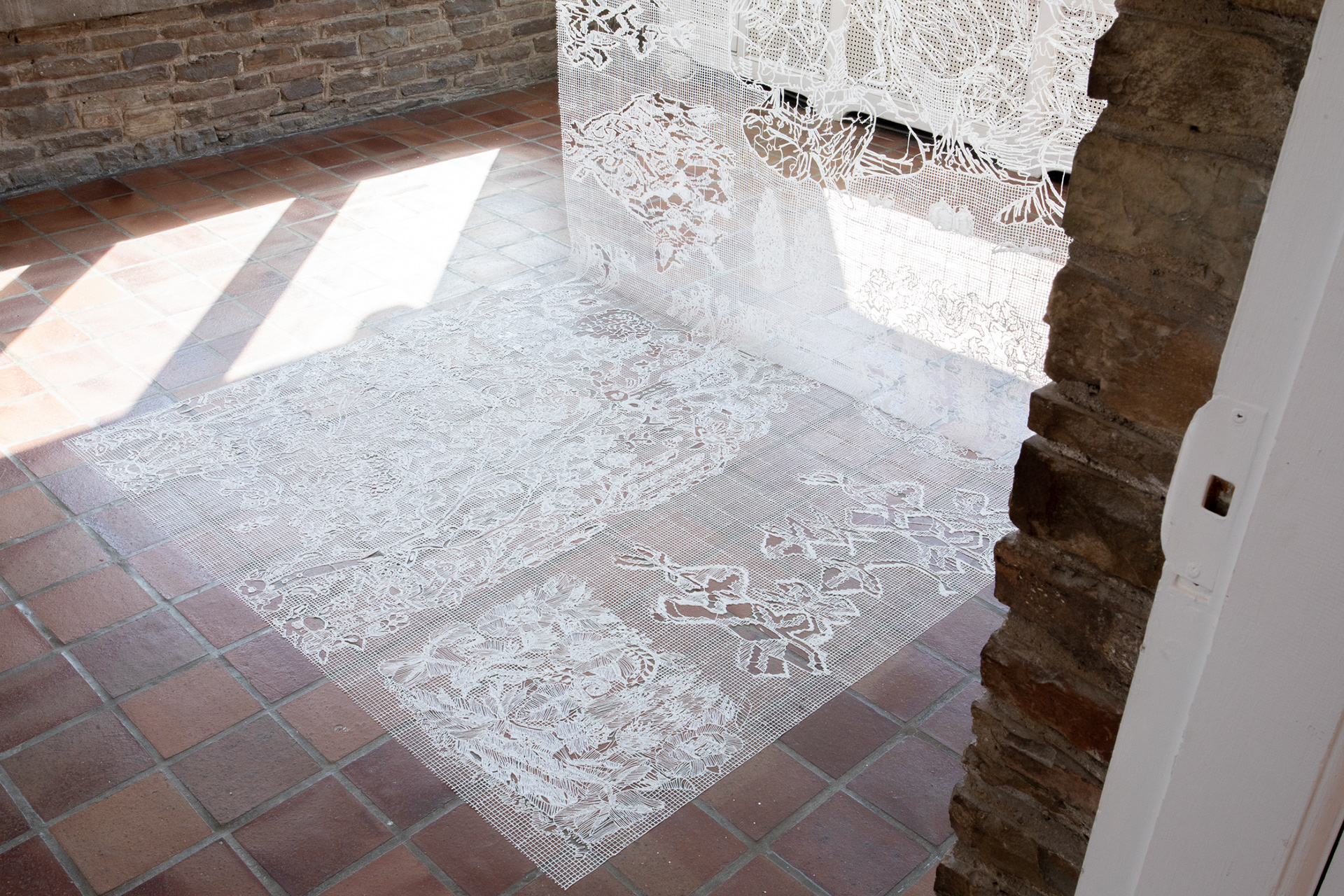
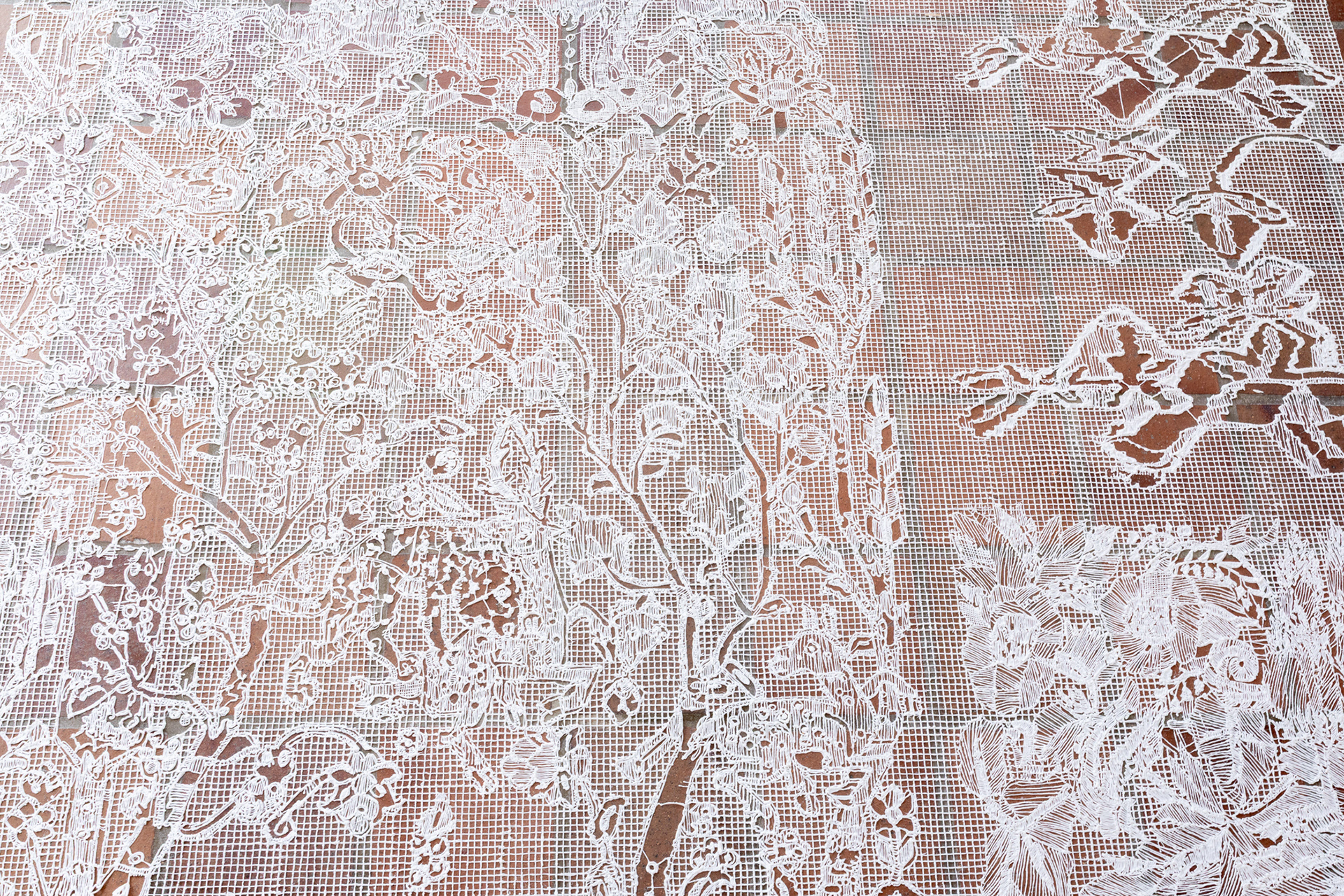
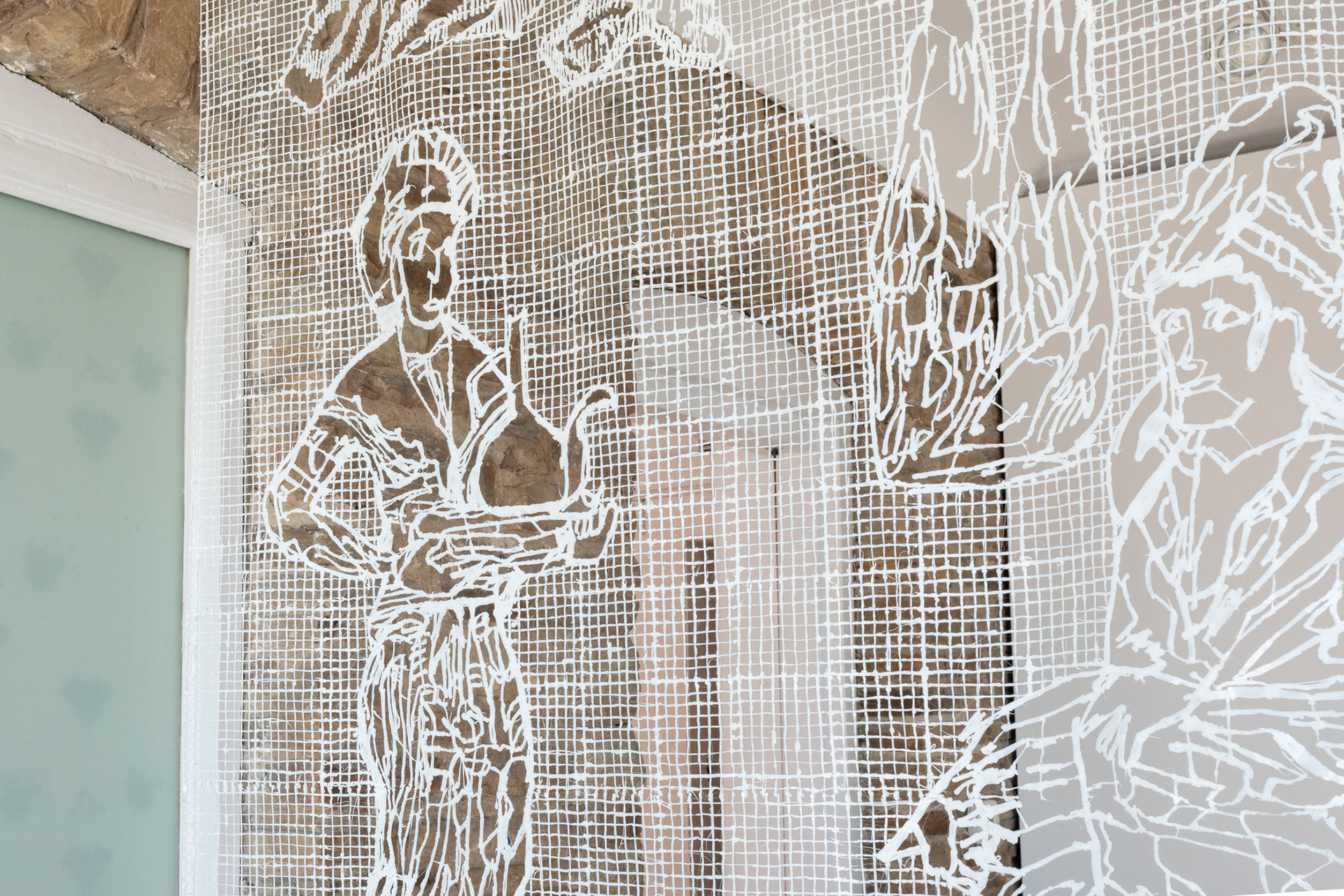
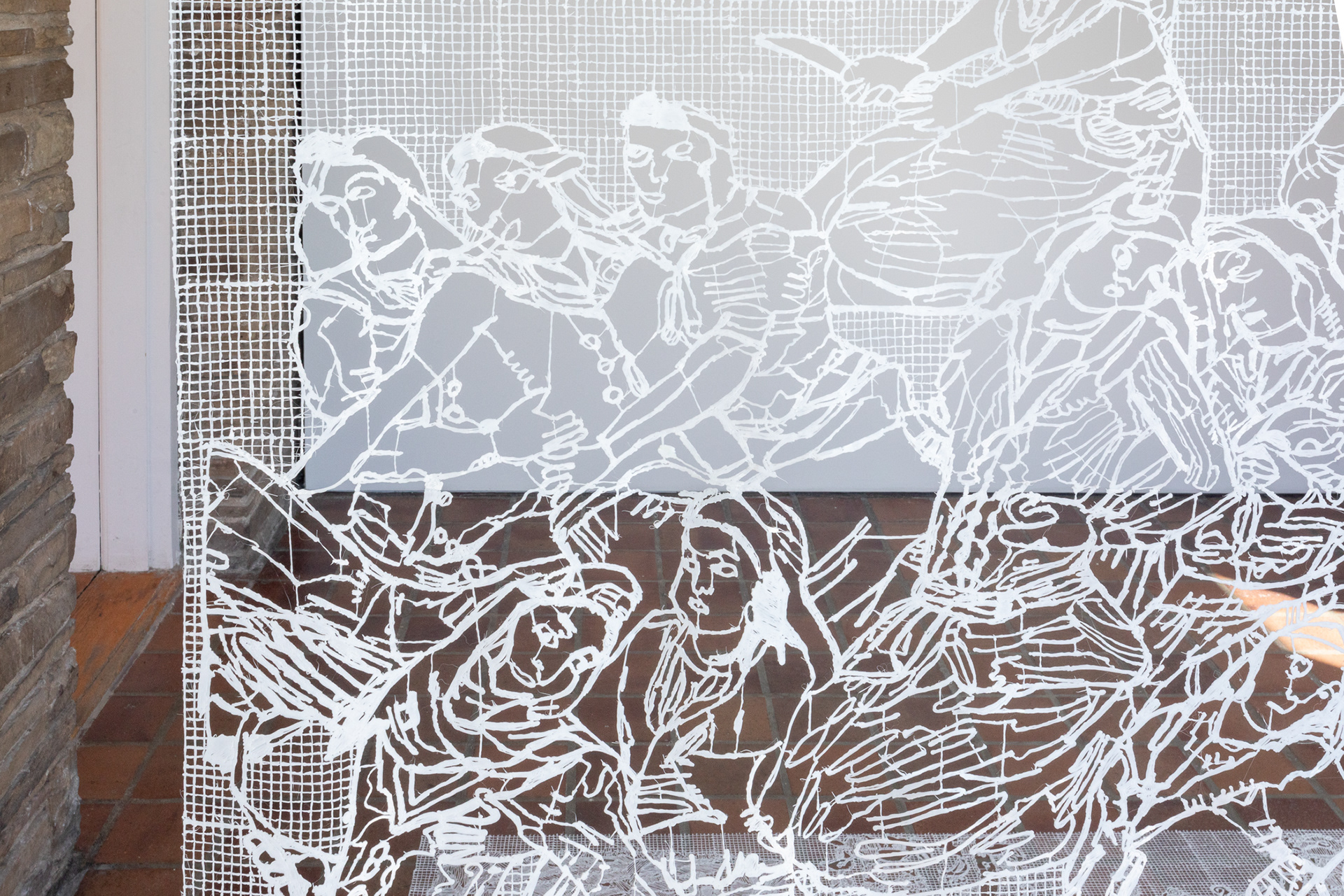
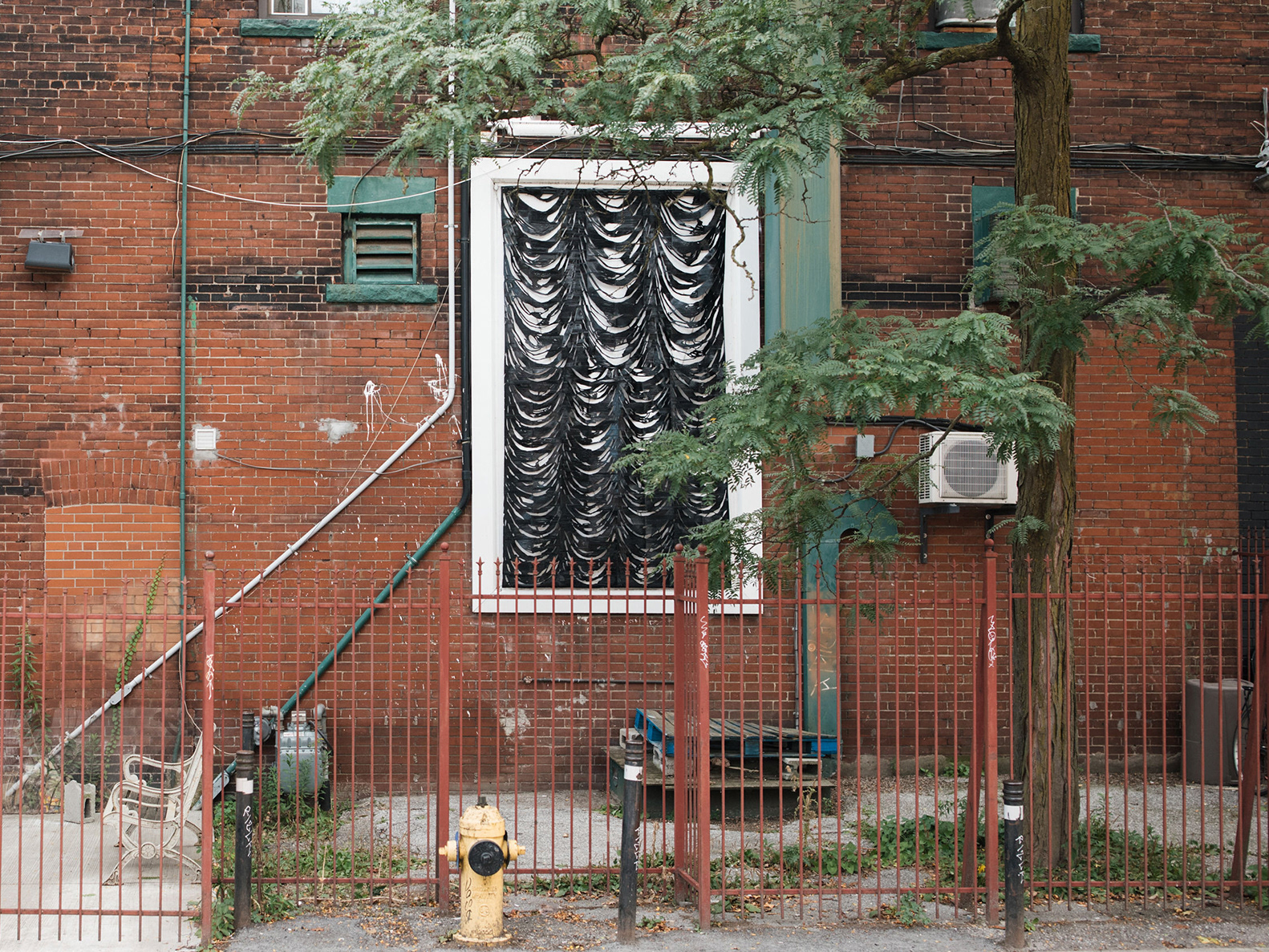
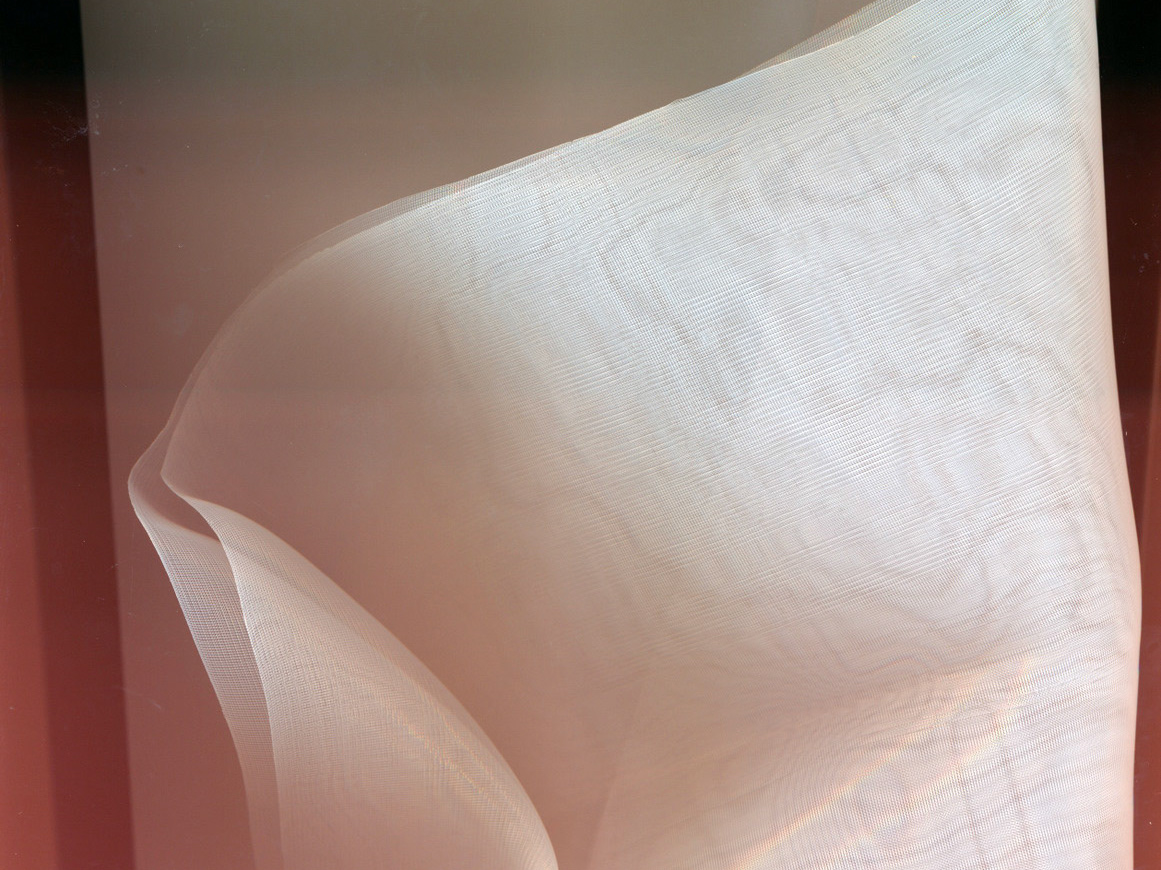
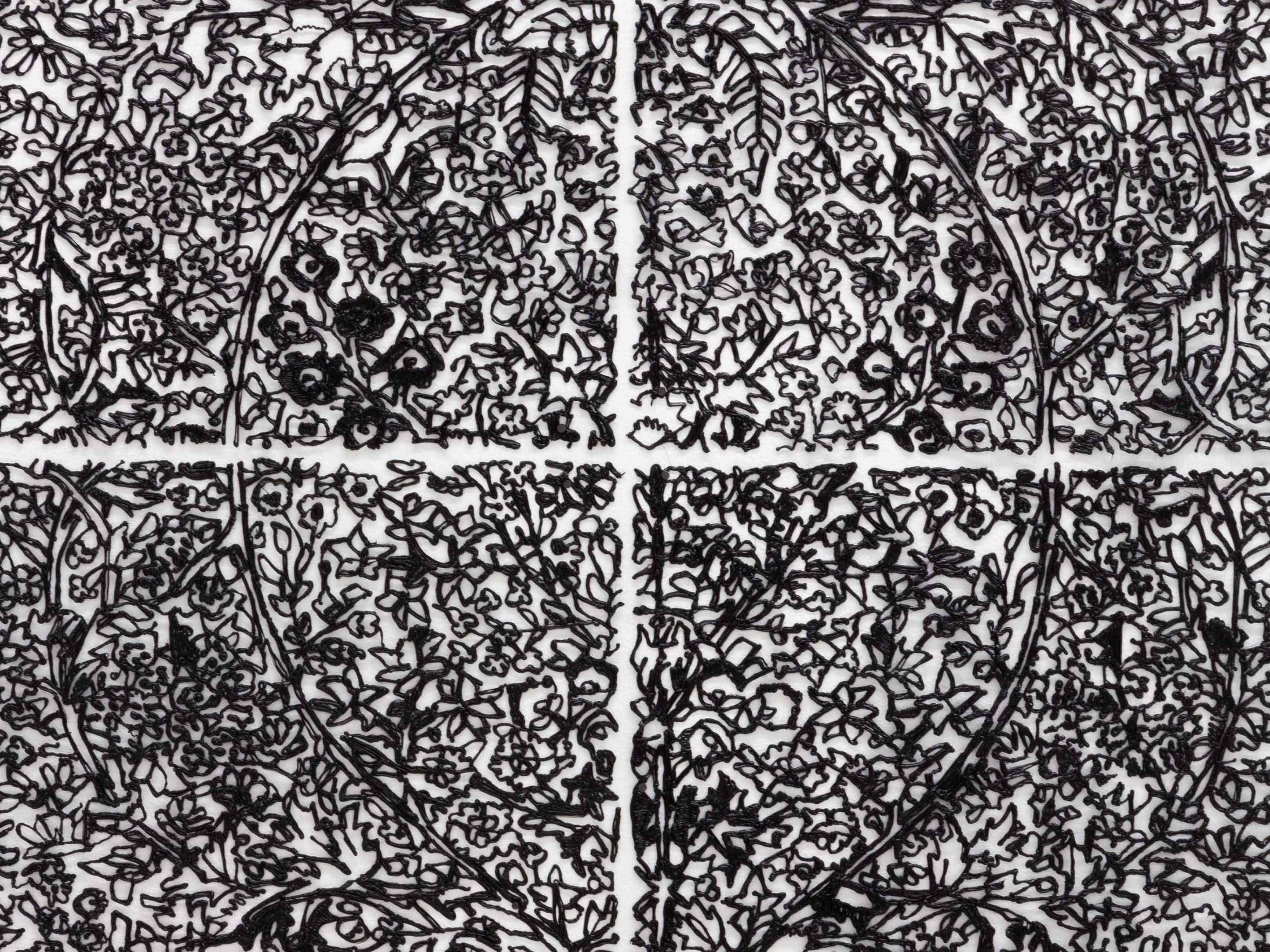
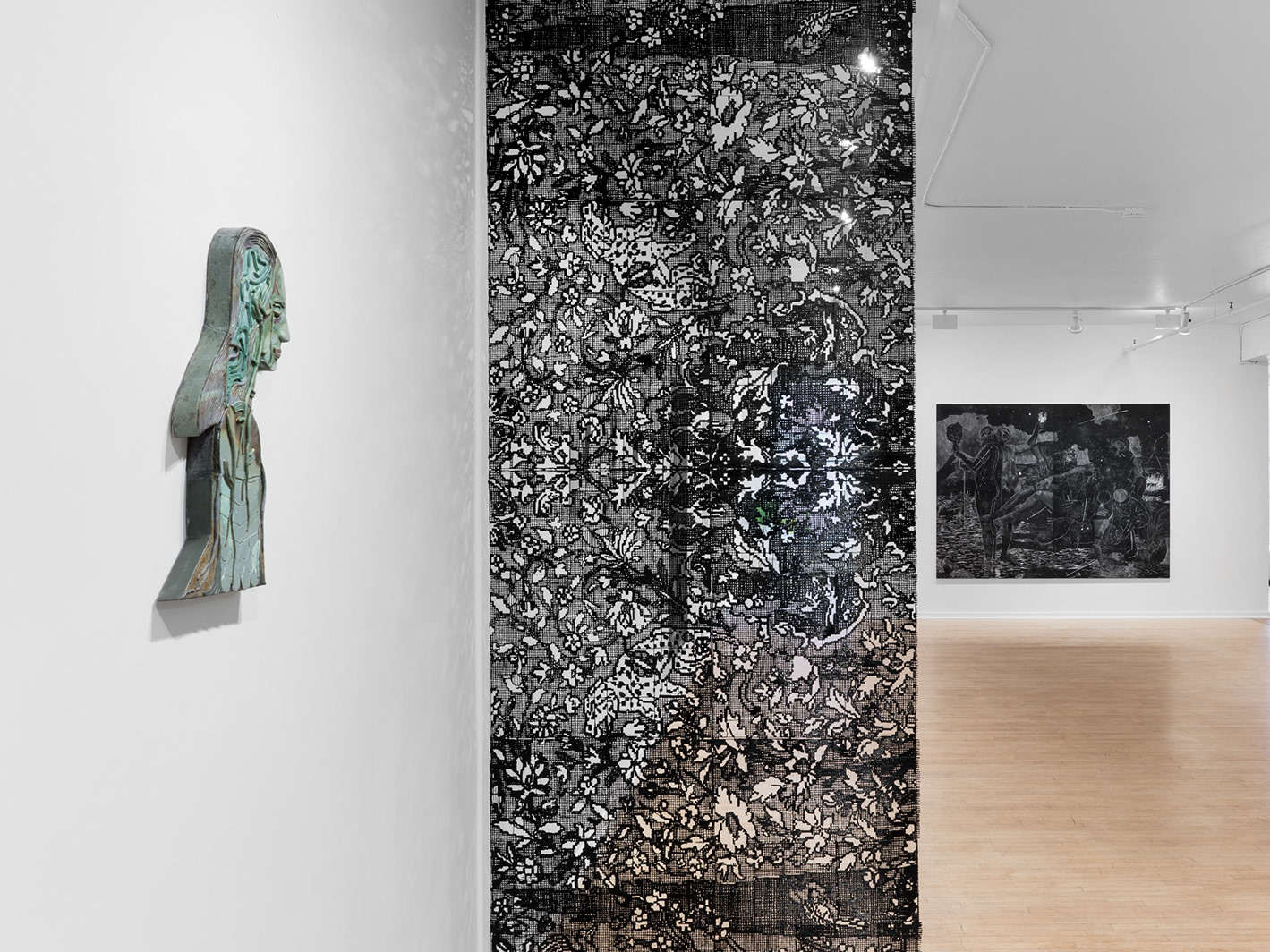
By transforming a rug into a lace-like membrane by drawing with filament, Sukaina Kubba’s Tonight I Received News That My Beloved Will Come, 2026, is composed of fragments of found rugs to tell the stories of displacement, travel and trade, flora and fauna. Like a textile that has all but disintegrated, the gossamer and transparent quality of the work translates the object into the imaginary, engaging memory and history. Designs often feature streams of water, flowers, shrubs, trees, and sometimes birds as well as geometric shapes and patterns that offer protection. Rugs are nomadic, often rolled and carried and then unfurled to make familiar a home elsewhere.
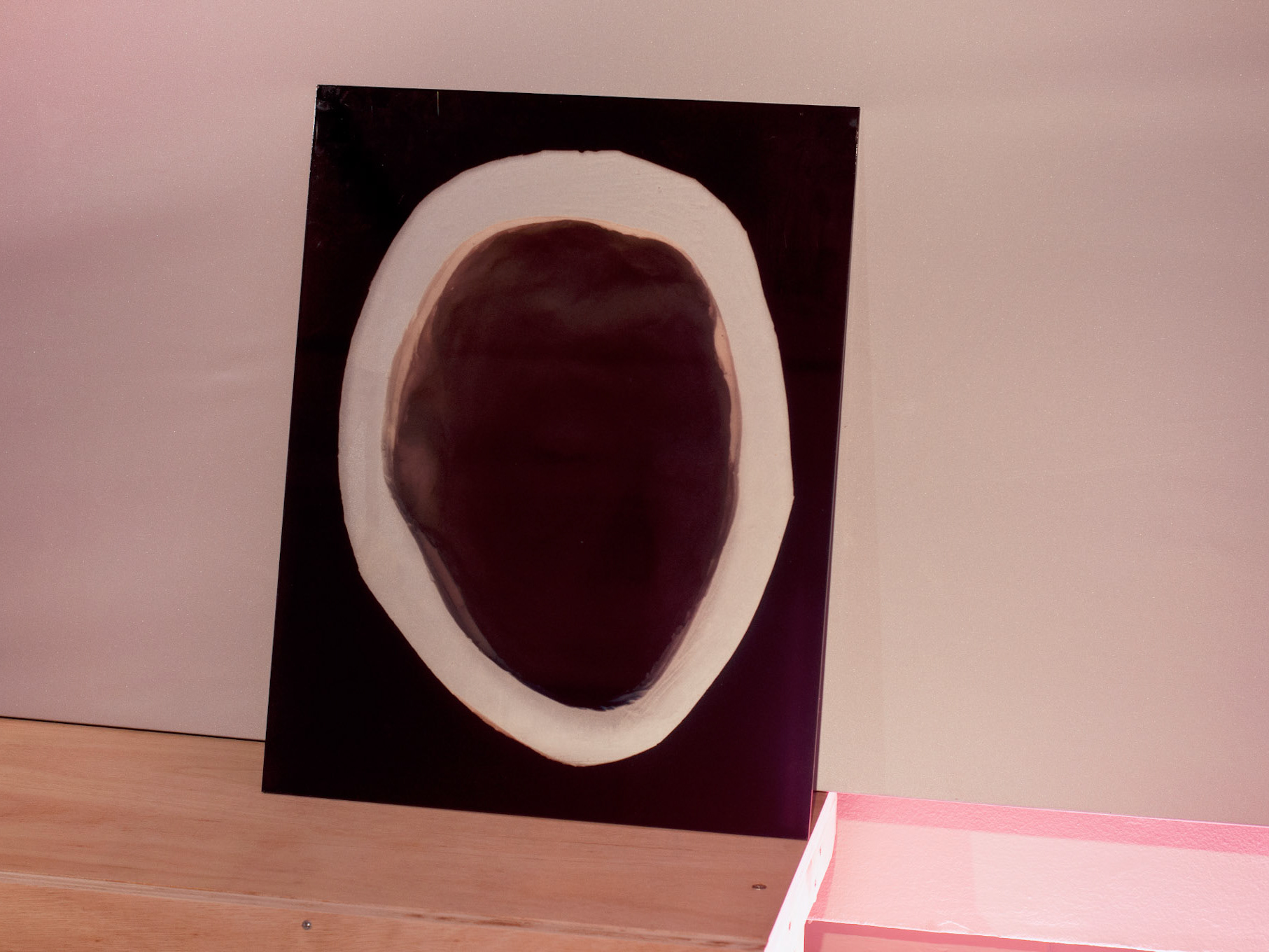
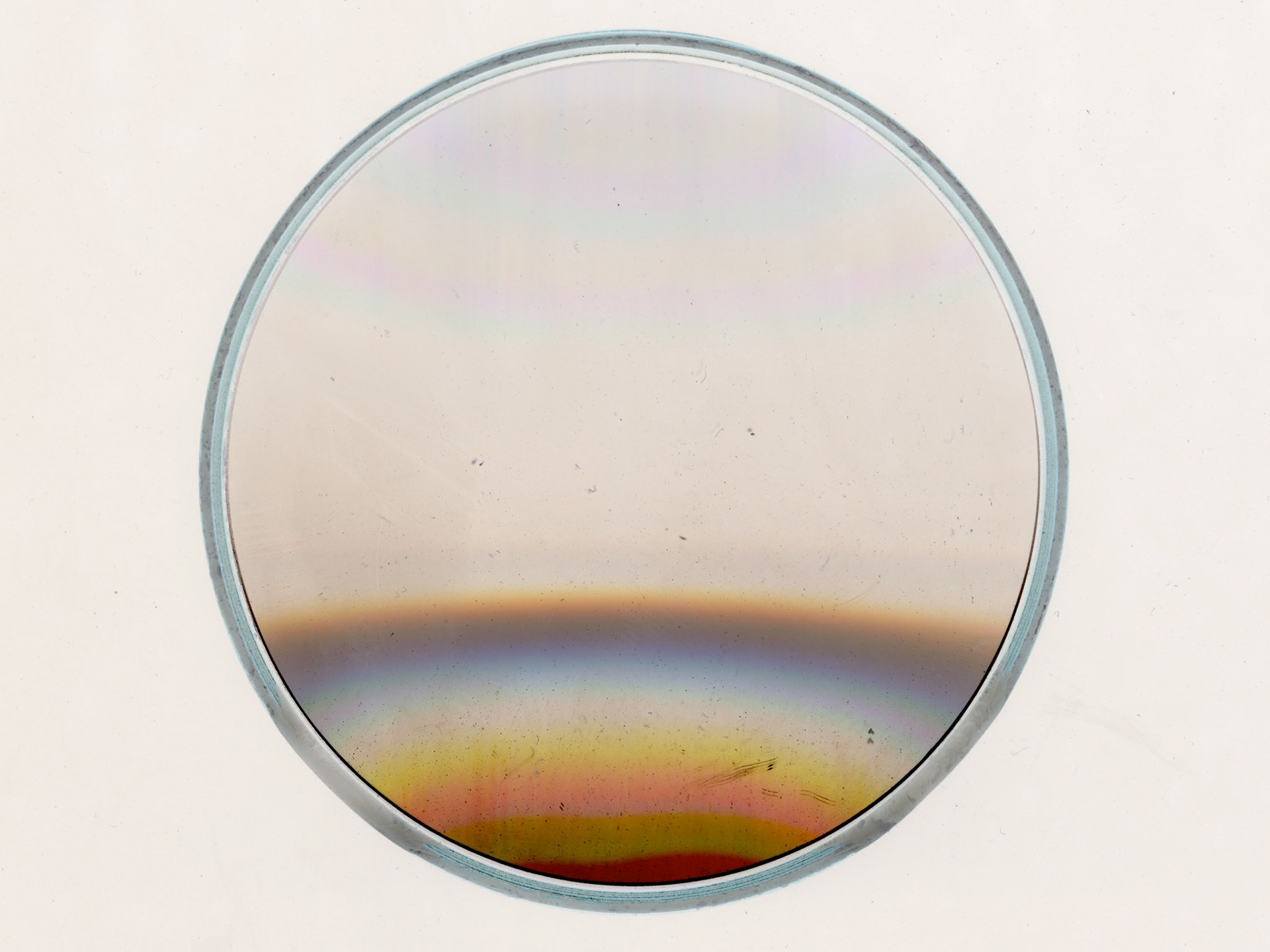
Apparitions, traces and reflections emerge and dissolve throughout the exhibition. The presence and absence of the body is embodied through the metaphor of the flower; “the thinness and transparency of the petals (that lets one see the sunlight through them or see the shape of another overlapping petal coming from behind) gives them a kinship with the filmy substance, the substancelessness, of mental images.”
text by Karen Kraven
Les Fleurs du Mal, Oakville Galleries at Gairloch Gardens, 2026.
Photos: Jimmy Limit courtesy of Oakville Galleries.